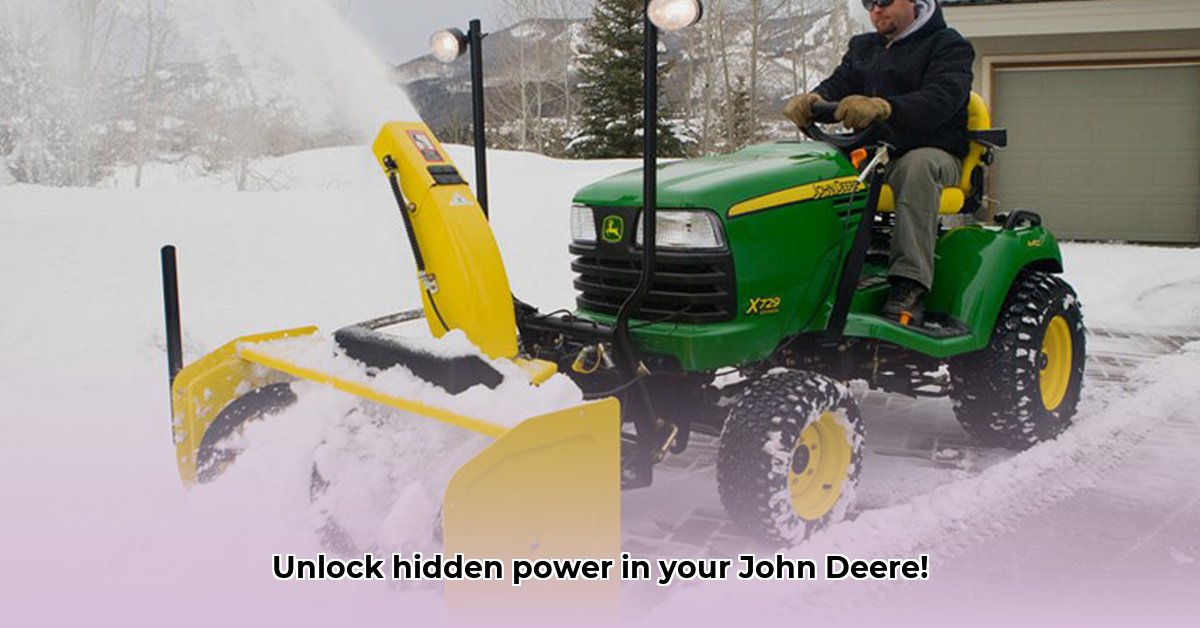
Plow Attachments for John Deere Lawn Tractors: Expanding Seasonal Use and Efficiency
Your John Deere lawn tractor is a valuable asset, but are you maximizing its potential? Adding a plow attachment transforms your machine into a versatile tool usable year-round, boosting efficiency and reducing the need for separate equipment. This article will guide you through selecting, attaching, and maintaining plow attachments for your John Deere, empowering you to tackle a wider range of tasks with enhanced sustainability in mind. For more on John Deere lawn tractors, check out this helpful resource.
Beyond Mowing: All-Season Yard Management
A plow attachment dramatically expands your John Deere's capabilities. Instead of seasonal limitations, you can tackle snow removal in winter, prepare garden beds in spring, and clear leaves in autumn. This multi-seasonal utility translates to significant time and cost savings. Imagine the efficiency of using one machine for various tasks throughout the year – a substantial advantage for both homeowners and agricultural professionals.
Key Advantage: Extended tractor utility across all four seasons, creating significant time savings.
Selecting the Right Plow Attachment: Matching Tool to Task
Choosing the appropriate plow hinges on your specific needs and property size. Larger properties with challenging soil conditions might require a heavy-duty plow, while smaller gardens and lighter tasks are better suited to a lighter-duty model. Always consult your John Deere tractor's owner's manual to ensure compatibility and safe operation. Never compromise safety; prioritize careful selection.
Data Point: The proper selection of a plow attachment ensures optimal performance and prevents potential damage to your tractor or property.
Attaching Your Plow: A Step-by-Step Guide
Attaching a plow is generally straightforward, but always reference your tractor's manual for model-specific instructions. Follow these basic steps:
- Safety First: Engage the parking brake and ensure your tractor is on level ground. This prevents uncontrolled movement and potential accidents.
- Identify Connection Points: Locate the attachment points on both the tractor and plow; these points are usually clearly marked.
- Secure Attachment: Align the plow with the tractor's connection points and firmly fasten it using the provided pins or hardware.
- Thorough Inspection: Before starting the engine, carefully check all connections to ensure a secure and stable fit. A loose connection can be hazardous.
- Gradual Lowering: Gently lower the plow to the ground, adjusting the depth as needed. Start slowly to get a feel for the plow's operation.
Actionable Insight: Always double-check all connections before operating your tractor with any attachment. This step prevents accidents and equipment damage.
The Advantages and Limitations of Plow Attachments
While plow attachments enhance functionality, they also have limitations. Let's review a balanced look at the following:
| Advantages | Disadvantages |
|---|---|
| Increased tractor versatility and efficiency | Increased storage space needed when not in use |
| Cost-effective expansion of functionalities | May limit other attachment usage while attached |
| Adaptability for various yard and garden tasks | Incorrect usage can lead to soil compaction or damage |
| Time and labor savings | Requires regular cleaning and maintenance |
Sustainable Practices with Plow Attachments
Using plow attachments promotes sustainability by extending the operational lifespan of your equipment, thereby reducing the need for purchasing new machines for each seasonal task. However, responsibly managing the entire lifecycle of the attachment (manufacturing, usage, disposal) is critical.
Expert Opinion: "Choosing durable attachments and practicing proper maintenance significantly reduces the environmental footprint over the long term," says Dr. Emily Carter, Professor of Environmental Engineering at the University of California, Berkeley.
Expanding Your Tractor's Functionality: Beyond the Plow
While plow attachments enhance functionality significantly, other attachments further expand your tractor's capabilities. For instance, a grass bagger improves cleanup efficiency, while a tiller prepares soil for planting. Exploring additional attachments allows you to customize your tractor to match various seasonal requirements and yard management needs.
Assessing the Long-Term Environmental Impact
While extending your tractor's utility benefits sustainability, a comprehensive approach is needed. Consider the entire lifecycle of the attachment: manufacturing, transport, usage, maintenance, and disposal. Factors such as fuel consumption, material sourcing, and the attachment's impact directly on soil health need careful assessment. While John Deere provides data on emissions, independent verification of claims remains essential. Prioritize durable attachments, proper maintenance, and responsible disposal for minimized environmental impact.